You wake up, grab your phone, and immediately scroll through an avalanche of emails, tragic news headlines, and pristine social media feeds. Before your feet even touch the floor, a quiet, insidious voice inside your head starts its daily broadcast: You are already behind. You aren’t prepared for that presentation. You don’t have what it takes. By 8:00 AM, your chest feels tight, your shoulders are hunched, and your mood is completely tanked.
Over my ten years as a health writer and mental wellness advocate, I have worked alongside clinical psychologists and sat with hundreds of individuals battling chronic stress. Early in my career, I used to think positive self-talk was nothing more than toxic positivity or cheesy “new age” fluff. I was completely wrong.
The biggest insight I have learned from behavioral science is that your brain does not always know the difference between an actual external threat and a deeply held internal thought. Using affirmations daily isn’t about standing in front of a mirror reciting empty wishes; it is a structured, scientifically proven method to manually disrupt negative cognitive patterns and rewire your neural circuitry. Let’s explore how to turn this practice into a practical psychological tool for your mental health.
The Neurobiology of Affirmations: Rewiring Your Brain’s Default Network
To appreciate why self-affirmation works, we have to move past the spiritual cliches and look directly at human neuroanatomy. Your brain possesses a beautiful characteristic known as neuroplasticity.
The Jungle Path Analogy
Think of your brain’s thought patterns like a dense, overgrown tropical jungle. When you repeat a negative thought over and over—like “I always mess things up”—you are driving a heavy bulldozer through that jungle. Over time, you create a smooth, wide, deeply rutted dirt road. Your brain loves efficiency, so whenever a stressful situation occurs, it automatically takes that wide road of self-doubt.
When you begin using affirmations daily, you are deliberately stepping off that dirt road and hacking a new path through the brush. At first, it feels awkward, slow, and full of friction. But the more you walk that new path, the wider and smoother it becomes, while the old negative road eventually grows over from disuse.
Neuroimaging and Self-Processing
Functional magnetic resonance imaging (fMRI) studies show that practicing self-affirmation activates the brain’s ventromedial prefrontal cortex (vmPFC). This is the exact same reward system that lights up when you eat delicious food or win a prize. By actively focusing on your core personal values, you send safety signals to your nervous system, downregulating the amygdala—the brain’s emotional alarm system that triggers anxiety and the fight-or-flight response.
The Anatomy of an Affirmation: How to Avoid the “Rejection Effect”
Many beginners try using positive self-talk, fail within three days, and give up. They say things like, “I am completely wealthy and financially free,” while staring at a bank account with a balance of twelve dollars.
When your affirmation stands in direct, radical opposition to your current reality, your brain’s defense mechanism flags it as a lie. This creates cognitive dissonance, causing your subconscious mind to reject the phrase completely and leaving you feeling more discouraged than before. To make your statements stick, they must be psychologically sound.
1. Shift to Progress-Based Language
If an absolute statement feels like a lie, rephrase it to focus on your capacity to grow and handle discomfort.
-
Instead of: “I am completely fearless and calm.”
-
Try: “I am capable of navigating stressful moments, and I am learning to calm my breath.”
2. Ground It in Personal Values
Affirmations are not generic templates. They need to tie directly into your unique, authentic value system.
+------------------+-----------------------------------------+-----------------------------------------+
| Focus Area       | Avoid This (Fixed/Unrealistic)           | Use This (Value-Driven/Actionable)      |
+------------------+-----------------------------------------+-----------------------------------------+
| Imposter Syndrome| "I am the smartest person in this room  | "I bring unique value to this team, and |
|                  | and I know all the answers."            | I have the capability to learn."        |
+------------------+-----------------------------------------+-----------------------------------------+
| Body Image       | "I absolutely love every single part of | "My body is strong, resilient, and      |
|                  | my appearance today."                   | deserves respect and healthy choices."  |
+------------------+-----------------------------------------+-----------------------------------------+
| Emotional Stress | "Nothing ever bothers me and I am happy | "I accept my feelings without judgment,  |
|                  | 100% of the time."                      | and I can choose how to respond."       |
+------------------+-----------------------------------------+-----------------------------------------+
Integrating Affirmations Into Your Everyday Life
Consistency is the absolute engine of neuroplasticity. To experience the true mental health benefits of this practice, you must anchor your phrases into your existing routines.
1. Habit Stacking
Do not try to carve out a random, isolated twenty-minute block for your affirmations; you will forget to do it. Instead, use a behavioral psychology technique called habit stacking. Tie your statement to an automated daily anchor habit you already do without thinking.
-
The Anchor: Brushing your teeth, waiting for your morning coffee to brew, or buckling your seatbelt in the car.
-
The Stack: As you wait for your coffee to drip, repeat your chosen phrase three times slowly, synchronizing the words with deep, steady belly breaths.
2. Visual Environmental Prompts
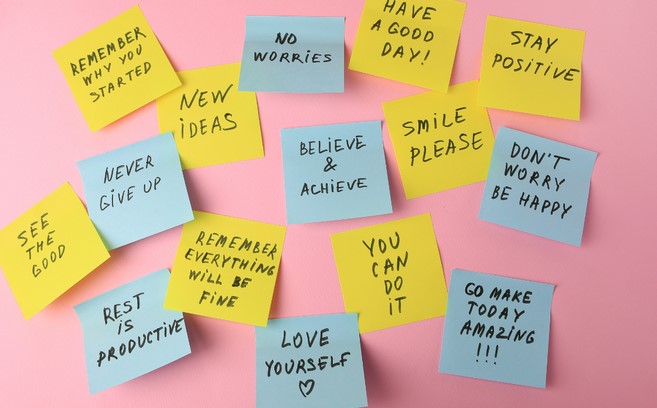
Your subconscious mind is constantly scanning your environment for clues. Use this to your advantage by placing simple, highly visible reminders where your eyes naturally wander. Write a specific phrase on a sticky note and paste it on your bathroom mirror, or set a recurring, quiet notification to pop up on your phone screen at 2:00 PM when your workday stress peaks.
Expert Advice and Hidden Warnings
As a veteran health writer, I believe it is vital to balance inspiration with clinical reality.
💡 Pro Tip: Use Your Own Voice: Your brain is uniquely attuned to your own auditory frequency. Instead of just reading an affirmation silently or listening to a stranger’s meditation track on a smartphone app, record yourself speaking your affirmations using a calm, steady voice. Play the recording back to yourself during your morning walk or commute. Hearing your own voice validate your capabilities acts as a powerful shortcut to safety within your central nervous system.
⚠️ The Hidden Warning: Affirmations Are Not an Emotional Broom: Beware of using positive self-talk as a way to sweep genuine, painful emotions like grief, anger, or deep sadness under the rug. This is known as spiritual bypassing. If you are hurting, forcing yourself to say “I am only filled with love and joy” represses your authentic experience, which actually spikes your systemic cortisol levels over time. Always acknowledge the painful emotion first: “I feel incredibly anxious right now, and that is okay. I still have the tools to handle my day.”
Your Step-by-Step Guide to Crafting a Personal Script
Ready to begin using affirmations daily to support your emotional health? Follow this precise three-step formula to create a set of phrases tailored to your mind:
-
Step 1: Identify the Saboteur: Take a piece of paper and write down the exact negative phrase your internal critic repeats most often (e.g., “You fail every time you try something new”).
-
Step 2: Neutralize and Validate: Look at that statement objectively. Soften its absolute terms (like “always” or “never”) and frame it around your capacity for growth.
-
Step 3: Apply the Three P’s: Ensure your new statement is Present-tense (I am/I can), Positive (focused on what you want, not what you want to avoid), and Personal (rooted in your own behavior, not trying to change how other people act).
Mastering Your Mindset
Your mind is a beautiful, complex garden. If you do not actively plant the seeds of your choosing, weeds will naturally take over. Dedicating just two minutes every morning to consciously directing your thoughts isn’t a vain vanity exercise—it is a protective habit that builds cognitive flexibility, lowers distress, and returns the steering wheel of your life to your own hands.
The internal script you tell yourself matters more than any external input. Start small, stay patient with the process, and give your neural pathways the time they need to rebuild.
Have you ever experimented with a regular self-affirmation practice before? If you were to write just one supportive, realistic phrase to help you navigate tomorrow’s challenges, what would it say? Drop your thoughts in the comments below, and let’s build a supportive community of mindful self-talk together!